



Define conditions and activities
Before opening the wardrobe, the first step is to analyze the specific context of the displacement. The duration, the planned activities, and the real possibility of washing clothes are determining factors. The same number of days may require very different luggage if the climate or the reason for the trip changes. It is recommended to consult the weather forecast close to the departure and the current conditions of the airline or transport company. It is fundamental not to copy dimensions or liquid restrictions from generic sources, but to verify the information directly with the operator or the applicable authority.
Create combinations with available garments
The practical exercise consists of writing possible outfits using garments that are already owned. The key is to review what function each addition fulfills. An extra layer, a formal garment, or a second pair of shoes must respond to a specific need of the itinerary, not to an arbitrary style quota. This approach aligns with the philosophy of traveling light, which prioritizes versatility and the combination of garments. However, it is important to remember that access needs, personal equipment, or work may require more space. Traveling with little volume is not presented as a moral virtue nor as an equally viable option for all people or situations.
Review actual transport and luggage
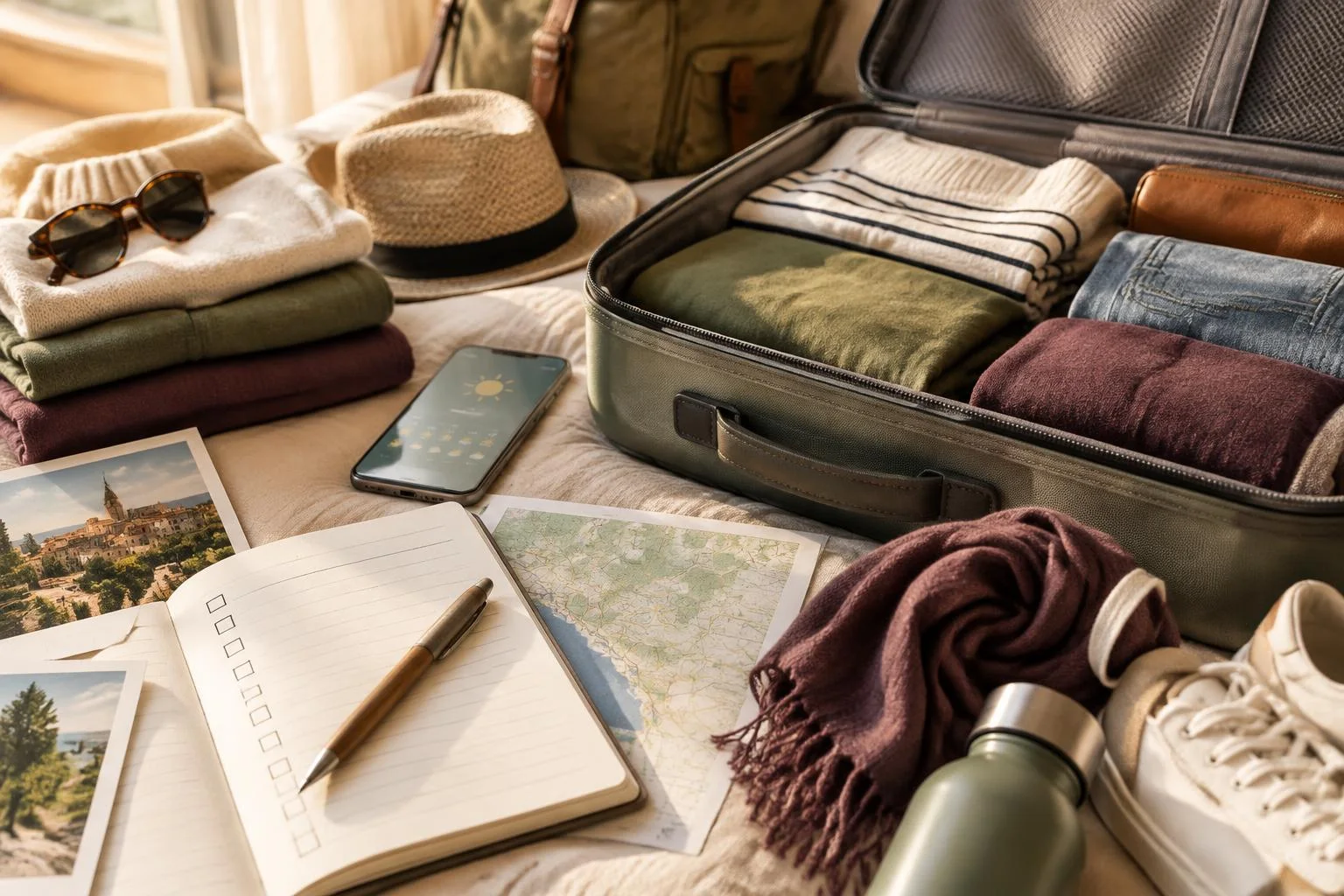
Once the outfits are defined, it is necessary to contrast the final volume with the actual restrictions of the transport. The article does not guarantee that a suitcase fits in the cabin without measuring it and contrasting it with the specific ticket. It proposes checking the documentation, reservations, and essential objects through a personal list. Medications and their transport conditions must be managed with pertinent professional and official information, without offering clinical indications or diagnoses. The luggage list must reflect the logistical reality of the trip, not an aesthetic idealization.
Update the list after returning
The closing of the process invites noting after the trip what was used and what was missing. This review is a practical suggestion from the magazine to adapt the next list, not a scientific proof of Steves' method. By documenting real experiences, it allows adjusting the quantity and type of garments for future displacements. This continuous feedback helps personalize the luggage, ensuring that each item has a clear and useful purpose in the specific context of the trip.