



What the source contributes
The Victoria and Albert Museum (V&A) documents William Morris's deep interest in textiles and his technical learning process. According to the museum's archive, Morris sought to master specific techniques to achieve effects he admired in historical pieces. His production encompassed embroidery, prints, and weaves, and the V&A records his continuous experimentation, highlighting the intrinsic relationship between conceptual design and material realization. This documentation serves as a basis for understanding that repetition is not a simple ornament, but the result of deliberate technical and aesthetic decisions.
How to read it in your context
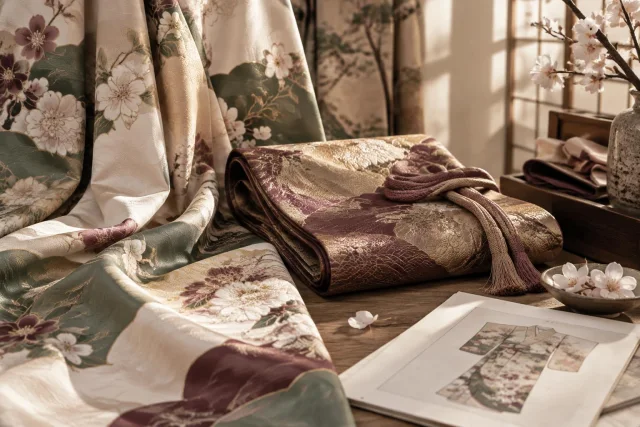
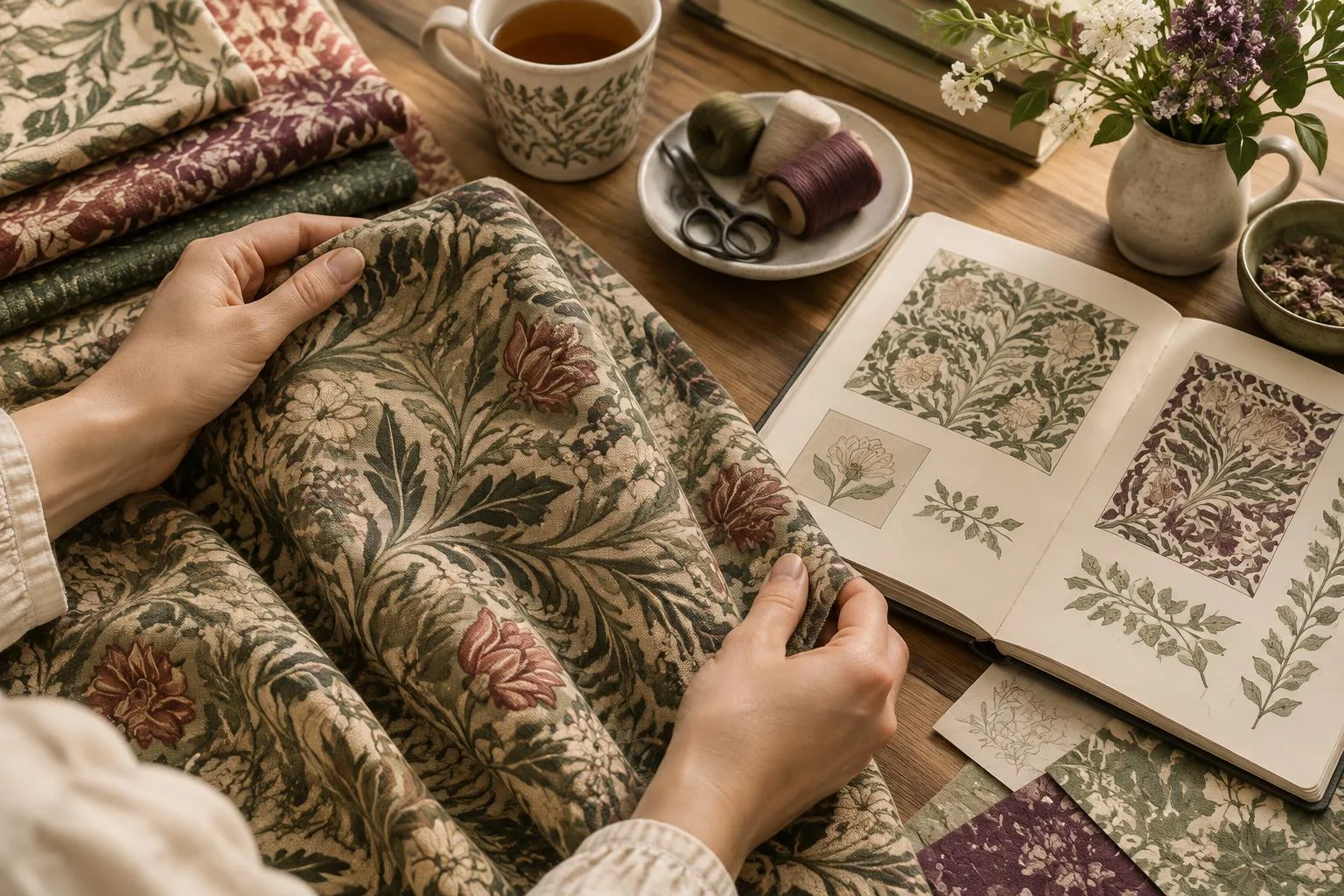
To apply this perspective to your own style, observe the visual structure of a garment or fabric without judging its historical value. Start by identifying the ground and the figure. Does the motif repeat in a single direction or in all directions? The contrast between the ground color and the drawing color determines the intensity of the visual rhythm. In Morris's context, technical execution was as important as the initial idea; therefore, when looking at a contemporary fabric, consider how the production technique (printing, weaving, embroidery) affects the sharpness and weight of the motif. Do not assume that a contemporary garment shares the same provenance, technique, or meaning as a Morris piece just because the pattern looks similar. Visual similarity does not imply a direct historical or technical connection.
Questions to choose with discernment
These questions are editorial proposals from Gentle Chic to help you analyze patterns with greater depth:
- Does the repeated motif create a sense of calm or dynamism? This depends on the scale and direction of the repetition.
- Is the contrast between the ground and the figure high or low? Low contrast can make the pattern perceived as texture, while high contrast defines it as an image.
- Does the repetition follow a strict mathematical logic or are there subtle variations? Describe the variations you see without deducing the manufacturing process or the author's intention from them.
- Does the visible production technique (threads, edges, printing) affect the perception of the motif? An embroidery has a relief that a flat print does not possess.
Limits of this guide
This guide is based on V&A documentation regarding Morris's experimentation, but it does not constitute a technical analysis of current textiles. Do not attribute specific properties to a modern garment based solely on its resemblance to historical designs. The observation exercises proposed here are tools for visual analysis, not methods of authentication or market valuation. The repetition of a motif is a universal design resource; its interpretation depends on cultural context, production technique, and the designer's intention, factors that cannot be deduced solely from the shape of the pattern. Use these observations to enrich your visual vocabulary, not to establish historical facts about contemporary garments.