



What the source contributes
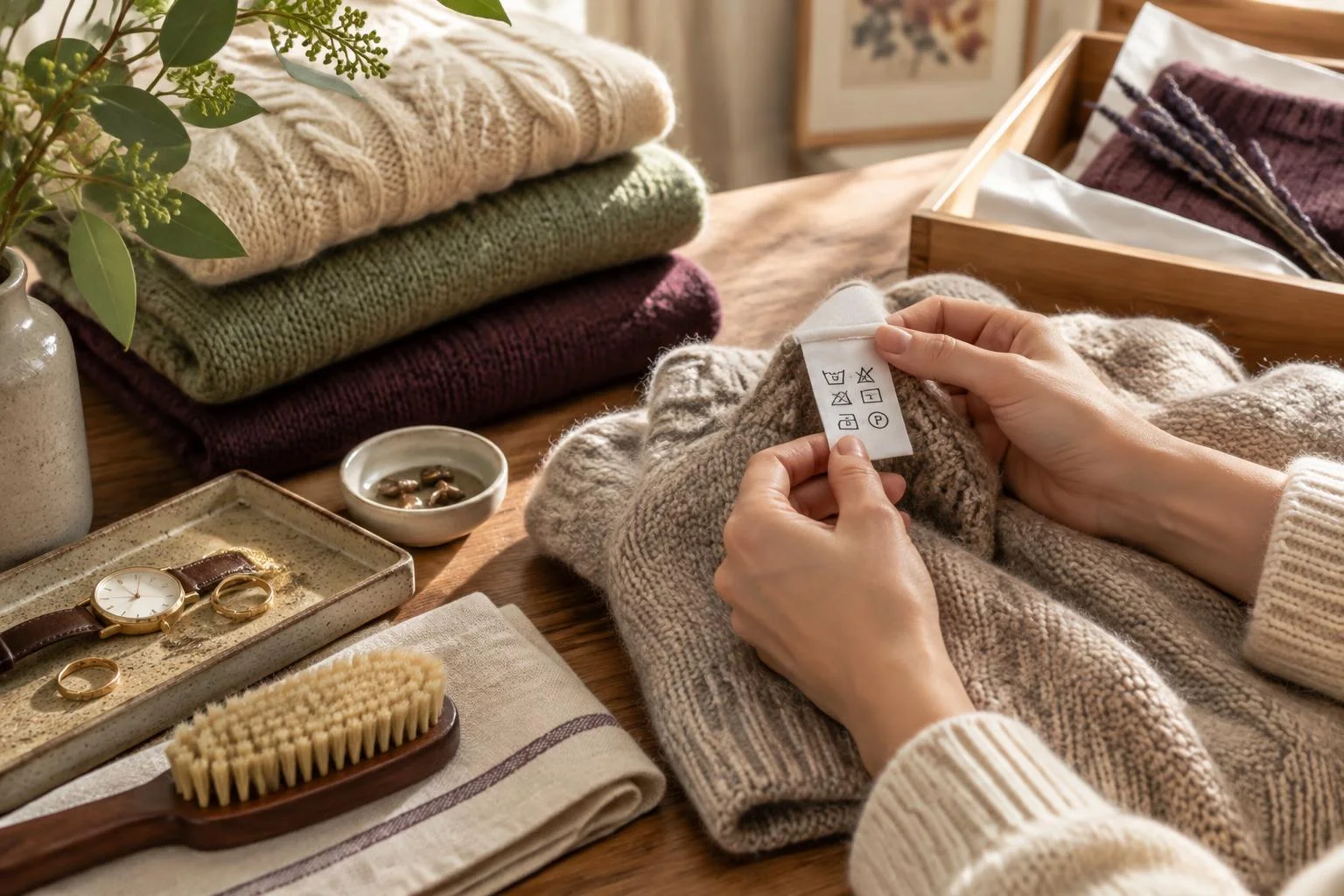
The organization Woolmark establishes that the starting point for maintaining any wool garment is consulting its label. This source documents that wool fiber is not a homogeneous block in terms of treatment; therefore, instructions must be read in the specific context of each piece. Woolmark distinguishes between knitted garments and other structures, emphasizing that the construction of the textile influences how its cleaning and storage should be managed. Additionally, the organization proposes specific preliminary actions, such as emptying pockets and removing accessories before storing the garment, to avoid mechanical damage or deformations during rest. The central message is that care must be adapted to the individual garment, not deduced generically from the presence of the word "wool" in the composition.
How to read it in your context
To apply these recommendations, it is useful to organize maintenance into three clear categories: cleaning, repair, and storage. Instead of improvising treatments based on experience with other garments, the user must record the specific instructions for each item. This involves verifying whether the garment allows machine washing or requires alternative methods, as not all wool sweaters tolerate the same processes. Separating these items allows addressing each need methodically. For example, when storing a garment, the action of removing accessories and emptying pockets becomes a standard step that protects the structural integrity of the fabric, as suggested by the source. This organization reduces uncertainty and avoids premature wear caused by inadequate treatments.
Questions to choose with discernment
Before acting on a wool garment, it is recommended to formulate the following questions to ensure the correct application of instructions: What specific structure does this garment have according to the label? Do the cleaning instructions differ from those of other wool garments I own? Have I removed all accessories and emptied the pockets before starting the storage process? Am I following the label's indications or am I assuming the treatment is universal? These questions help maintain focus on the specific piece and avoid generalizations that may compromise the durability of the textile.
Limits of this guide
This guide is based exclusively on Woolmark's documentary statements and does not constitute a laboratory test or an independent professional review. No specific durability results are claimed, nor are cleaning methods not mentioned in the source validated. The organization's promotional environmental statements are not turned here into own editorial conclusions. The user must remember that this information is orientative and that the garment's label is the final reference for any care decision.