




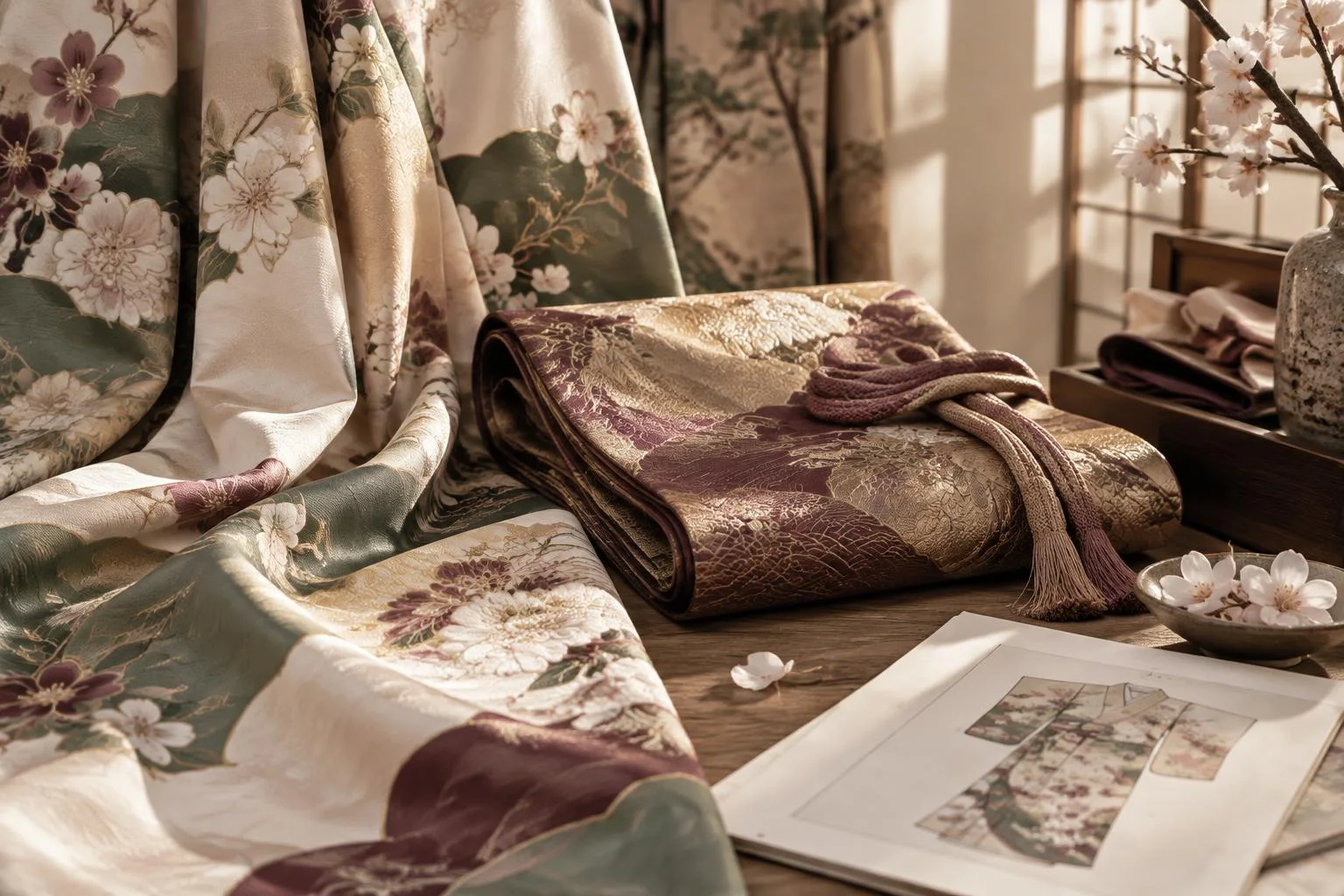
What the source contributes
The V&A describes the kimono as a garment constructed with straight seams, which crosses over and is secured by an obi. Its documentation highlights that color and decoration can express context and identity, and that some motifs have specific seasonal and cultural meanings. This precision matters: a design does not necessarily have the same meaning in all pieces or situations. The page also collects historical information; here it is not presented as an announcement of a current exhibition.
Looking at the kimono as a surface on a form helps to attend to both the silhouette and what runs across it. The obi participates in how the garment is worn; it is not just an added detail. At the same time, the available information does not allow assigning a concrete meaning to each color or motif without knowing its context.
How to read it in your context
As an observation exercise—not as a rule from the source—start with the form: look at the crossing, the drape, and the visual relationship between the garment and the obi. Then observe the color and decoration without rushing to translate them. Ask what information about the piece, its use, and its cultural context you would need to interpret them better.
If you choose a kimono to wear, you can consider what you are interested in highlighting: the form, the color, the obi, or the decoration. Also think about the occasion and how you want to approach the garment. If you do not know the context of a motif, describing it visually is more careful than attributing a meaning to it. This proposal is adaptable: it serves to guide the gaze, not to dictate a correct way to wear it.
Questions to choose with discernment
- What do I observe directly in the form, color, and decoration, and what am I assuming?
- What visual function does the obi fulfill in this ensemble?
- Do I have reliable information about the cultural or seasonal context of the motif?
- Can I appreciate the piece without turning a decorative detail into a universal symbol?
Limits of this guide
This guide is based on the documentary description of the V&A indicated in the sources. It does not interpret the symbolism of a specific piece nor does it replace information about its provenance or context. It also does not attribute medicinal effects to dyes: the available material does not support those claims.