




Strategies presented by the source
Megan Smith and Yana Weinstein present six learning strategies at The Learning Scientists: spaced practice, retrieval practice, elaboration, interleaving, concrete examples, and dual coding. The source notes that the amount of evidence, and its limitations, are not the same for all of them.
These ideas can be useful for reviewing hobby-related material, such as vocabulary in a language or the names of techniques. They are not a template that guarantees mastery of any activity: the proposal here is an informal adaptation by Gentle Chic, not an academic assessment.
Try to remember, then check
Instead of rereading the same page every time, try explaining an idea without looking at it. Then return to the material and check your answer. If you can’t recall something, treat that as a clue about what to look up again, not as a score of your ability.
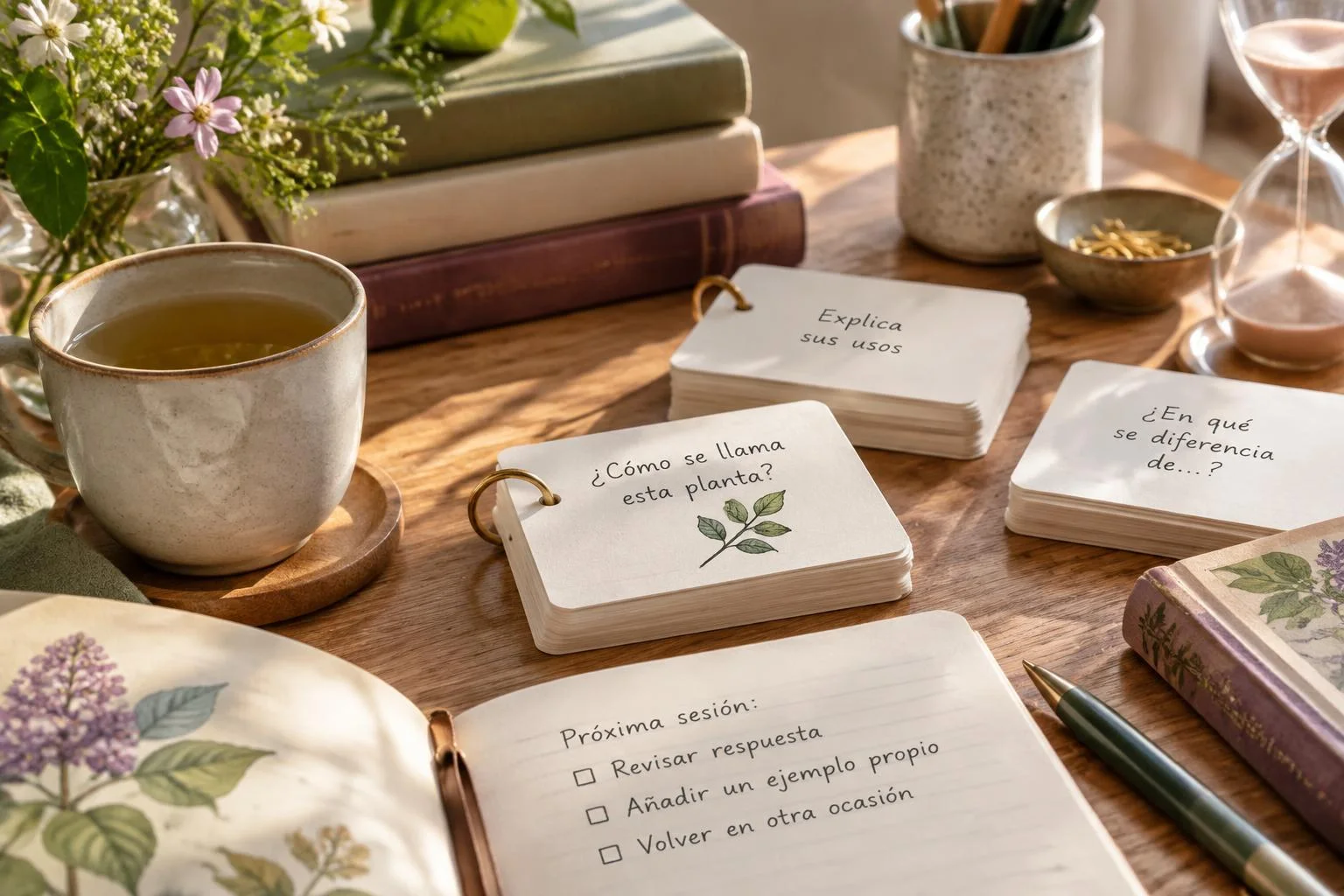
As a simple tool, prepare a card with three elements: the material you worked on, a question you can answer without consulting anything, and a reliable link to verify the answer. If it helps, add a brief example of your own, kept separate from the original material. The card does not need to measure how much you know; it can help guide your next review.
Return to the material on separate occasions
Another option is to revisit the topic at different times and write down a question for the next session. Spaced practice is one of the strategies presented by Smith and Weinstein, but this guide does not set a universal interval or optimal duration: the available material does not provide a specific guideline for every person, hobby, or subject.
You can adjust the difficulty to what you are learning. If a question is too easy, replace it with one that asks you to explain a relationship or a step. If you get stuck, consult the material and try again later. The goal is to maintain a manageable way to review, not to turn a hobby into a race to perform.
Memory and practical skill are not the same
Remembering a definition or the name of a technique is not the same as performing a manual, musical, or physical skill. These activities require practice and guidance specific to each discipline; this guide does not provide instructions for carrying them out safely. Nor does it extend memory strategies into promises about health or creativity. If the activity calls for it, seek specialized instruction.