



The documented context
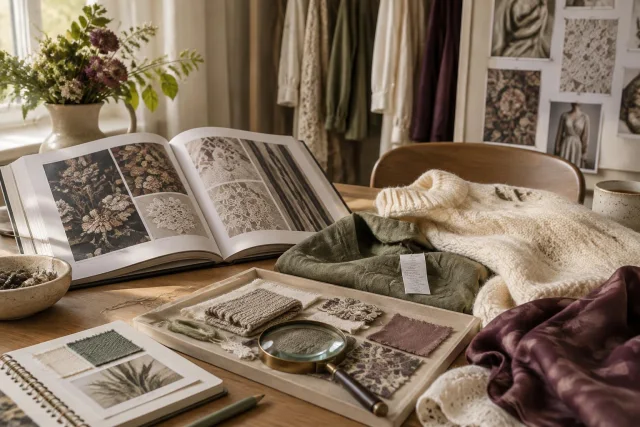
The Victoria and Albert Museum (V&A) textile collection is an extensive resource spanning a range of techniques and materials. According to the official information available on its website, the collection includes pieces that demonstrate expertise in techniques such as weaving, printing, embroidery, lace-making, tapestry-making, and carpet-making. The archive allows visitors to explore textiles from different places and historical periods, offering a global perspective on the evolution of textile arts.
It is important to clarify that this text is not based on a recent in-person visit or direct editorial examination of the pieces. The aim is to use the existence of this collection as a starting point for developing a more attentive and analytical way of looking at the textiles around us.
Observation exercises: an editorial proposal
Below is a series of original exercises designed to sharpen sensory and visual perception. These activities are suggestions for the reader and do not represent the museum’s official conclusions, interpretations, or recommendations.
1. The topography of the surface
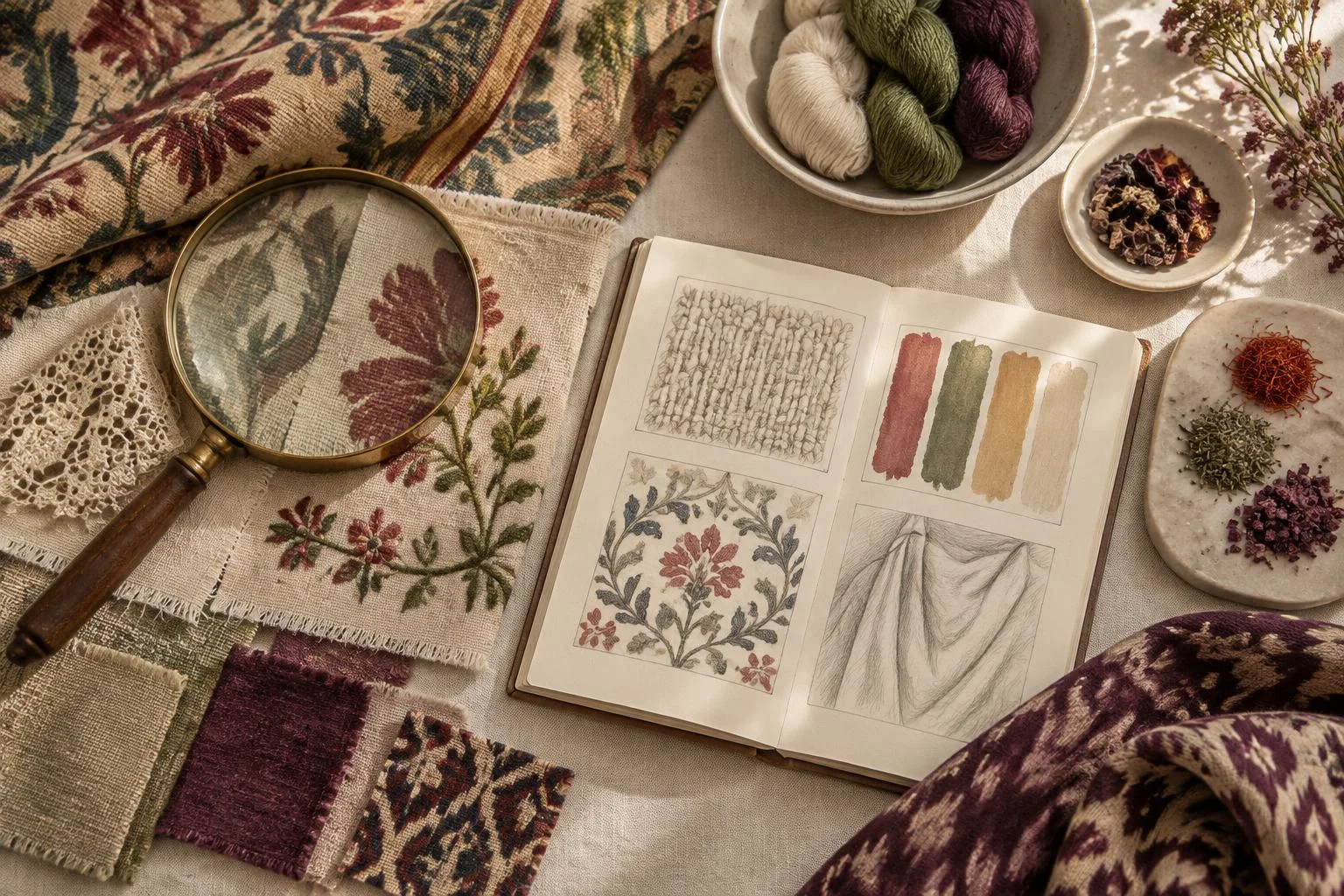
When looking at an image of a textile or a physical piece, pause before identifying the object. Ask yourself: What would the surface feel like to the imagined touch? Look for variations in the height of the fibers. In the case of a tapestry or embroidery, identify the areas where the thread gathers and the areas where the base is more visible. This exercise helps you understand how the construction technique determines the final texture, separating form from function.
2. The interplay of color and light
Observe how light interacts with the fibers. In printed or dyed textiles, the color is not uniform. Look for subtle variations in saturation that may be due to the method of applying the dye or natural wear. Ask yourself: Does the color come from the fiber itself or from a surface layer? This distinction is crucial to understanding the piece’s durability and aesthetic intent.
3. Motifs and cultural narrative
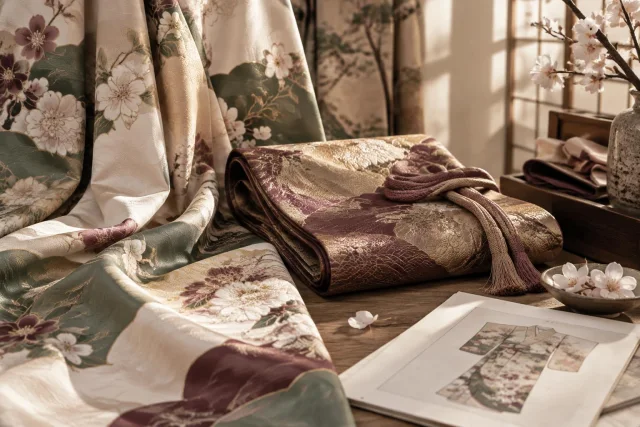
Many textiles carry patterns that go beyond decoration. When analyzing a repeated motif, try to identify its geographical or temporal origin if the information is available. The point is not to decode a universal message, but to recognize that each pattern responds to specific contexts of production and use. Observe the symmetry, scale, and repetition to understand how the design guides the viewer’s eye.
4. Function as form
Finally, consider the piece’s original use. Was it a garment, a household covering, or a ceremonial object? Form and technique are intrinsically linked to function. A textile intended for clothing needs flexibility and lightness, while a tapestry may prioritize density and opacity. As you observe, ask yourself how functional constraints have shaped the piece’s aesthetic.
Conclusion
Observing a textile is an act of attention. By separating the documented facts about the V&A collection from our own interpretations, we can develop a richer, more nuanced understanding of the textile arts. These exercises are an invitation to slow down and explore the technical and aesthetic complexity woven into every fiber.