



What the source provides
The Gemological Institute of America (GIA), in its guide on jewelry care, points out that heat, light, chemicals, materials, and treatments can influence appropriate care. It also indicates that storing pieces mixed together can promote rubbing. The practical consequence is not that there is a cleaning method for each broad category of gems, but that the specific piece matters: two pieces of jewelry that look similar may require different considerations if they differ in materials or treatments.
How to read this in your context
Before cleaning a piece of jewelry, look for the documentation you already have and note exactly what it identifies. A gemological report can provide information about a gem or its characteristics, but it does not automatically equate to an appraisal: describing or identifying is not the same as determining a value. Also, do not assume that any document confirms by itself the origin, value, or condition of the entire piece of jewelry. Check the scope of the report and which piece it corresponds to.
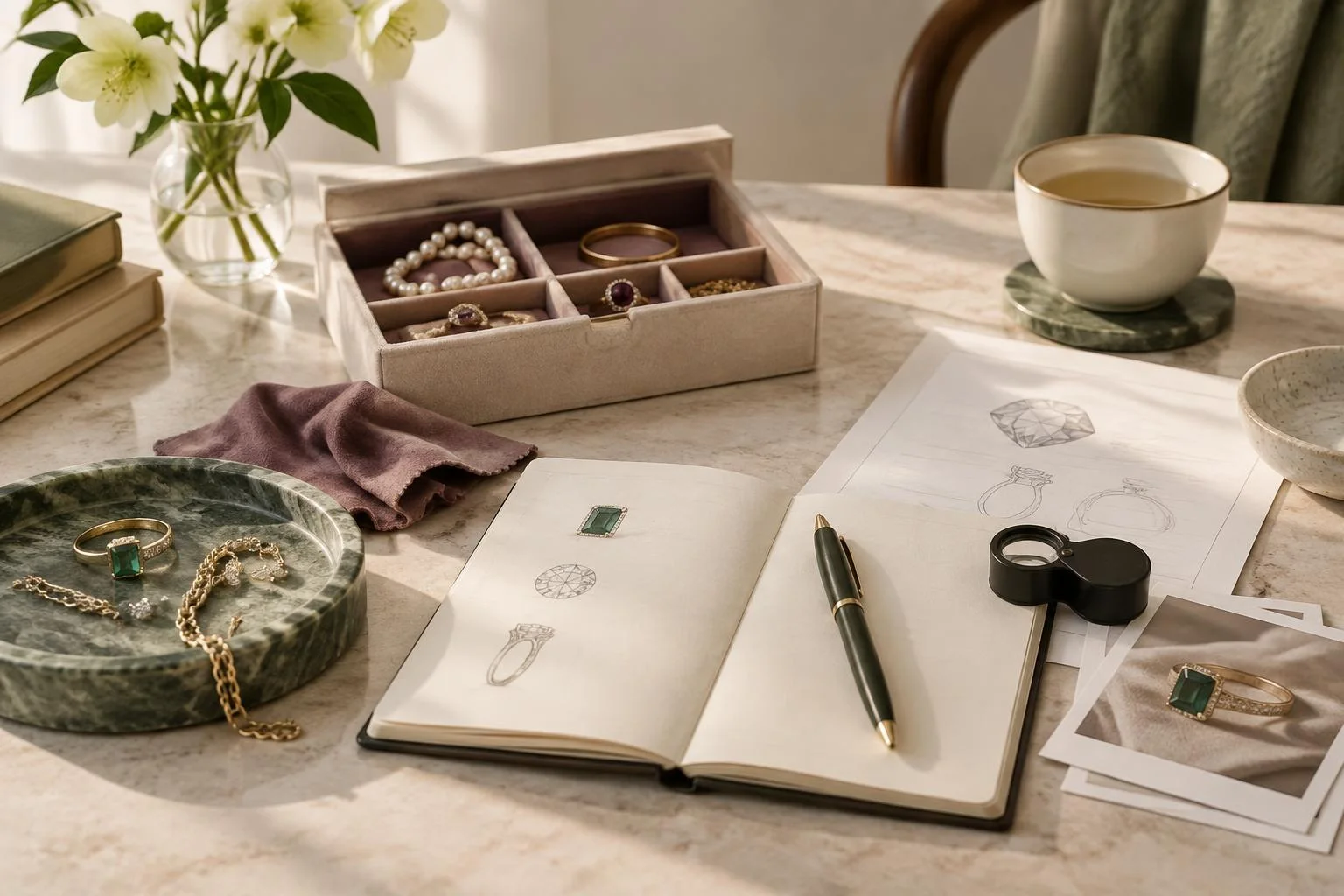
As a personal organizational exercise, you can gather the report, invoice, or other available papers and photograph the piece to identify it when making inquiries. This makes it easier to explain what you know and what remains unclear; it does not replace a professional evaluation.
Questions to choose with discernment
When consulting with the person who will handle the cleaning, ask: what materials and gems do you recognize in the piece? Are there known treatments or missing information? How do those data influence the method you propose? What elements of the jewelry will be considered in addition to the gem? And what document supports the identification or value, if one is being discussed? If you do not know of a treatment, say so instead of assuming it does not exist. Ask them to explain any limitations before accepting an option.
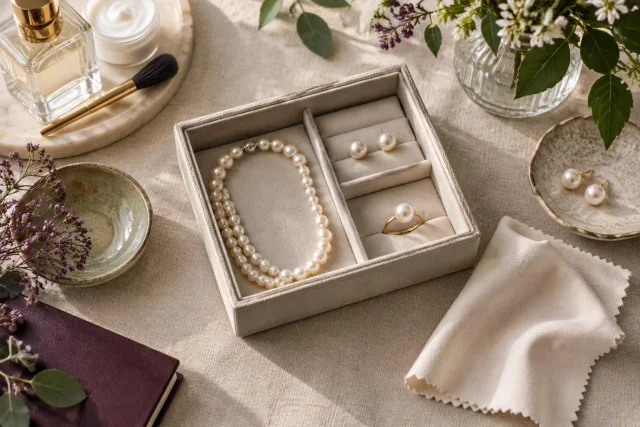
For storage, GIA's warning about rubbing invites you to ask how to separate the pieces, rather than assuming they can be stored together without contact.
Limits of this guide
This is a documentary guide, not a test of methods or a household recipe. It does not prescribe cleaners, ultrasonics, or steam: the available information does not allow recommending a universal option. The GIA guide offers general criteria, but specific care for each material or treatment is not detailed here. If data is missing, the adaptable proposal is to pause the chosen cleaning, locate the documentation, and consult with a qualified person who can evaluate that specific piece.