Consult allowed materials and size
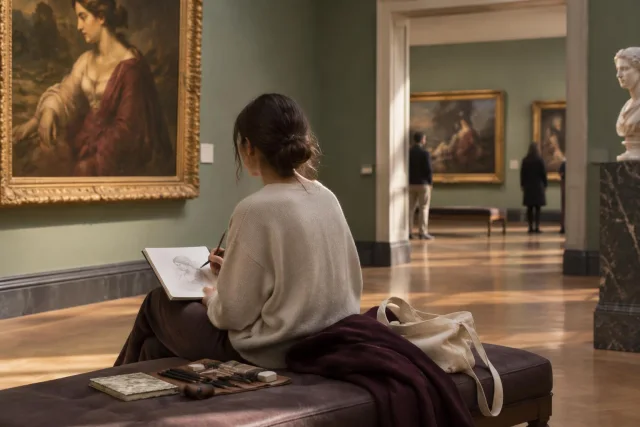
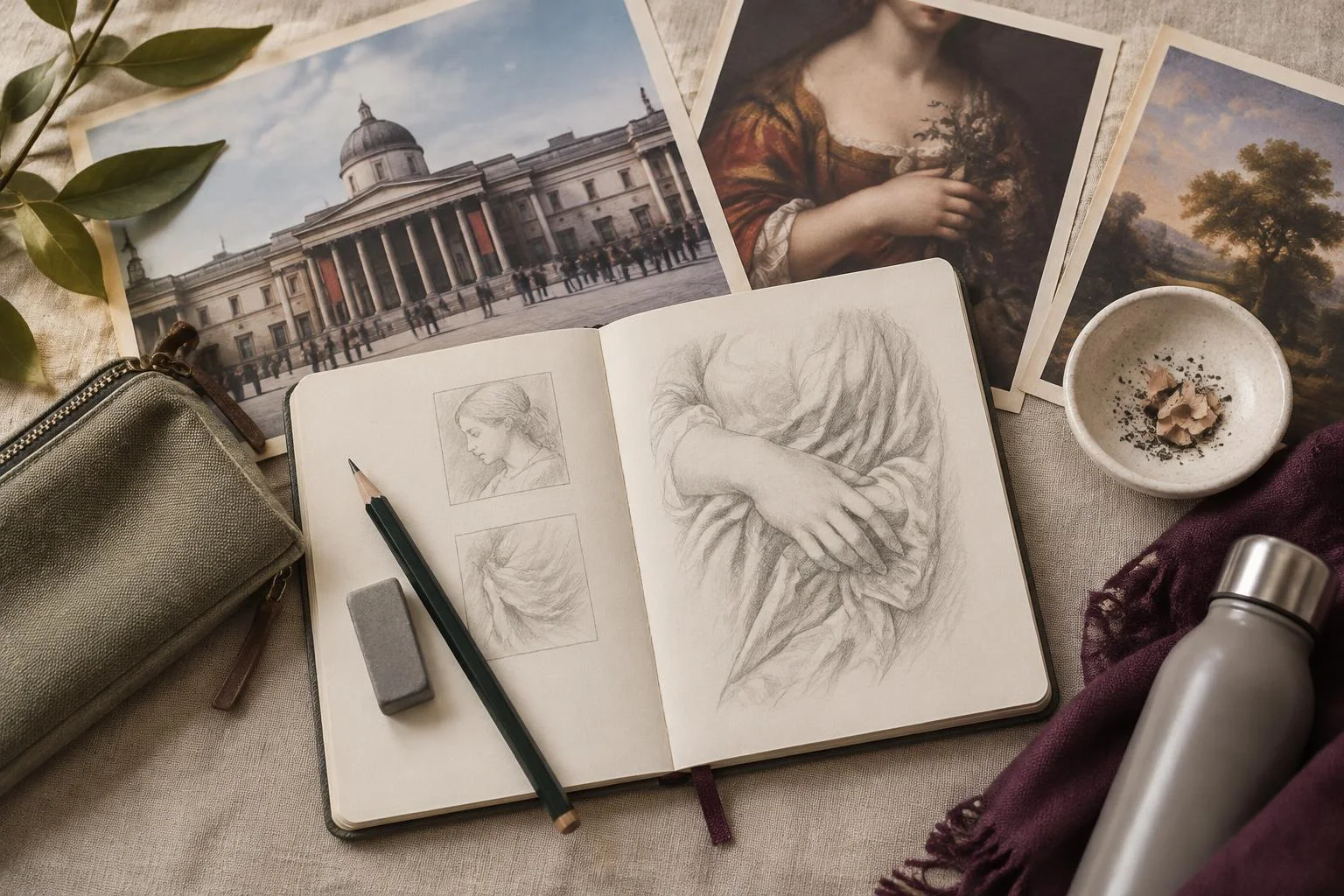
The National Gallery in London allows drawing in its rooms under specific conditions. According to the official information consulted, the paper or notebook cannot exceed A3 size; the time in front of a painting is also limited to ten minutes, and drawing is not allowed in access areas or passageways. The museum lists the allowed materials, so it is advisable to check that list before preparing the bag and carrying only a small notebook and a pencil that appears among the accepted options.
These rules correspond to the National Gallery: they should not be considered valid for other museums. They can also change, so it is useful to consult the official drawing page before the visit.
Choose a detail instead of copying everything
Instead of trying to reproduce a complete work, the session can focus on a visual aspect: a silhouette, a fold, or the relationship between several shapes. First, take a moment to observe. Then, make a simple sketch in the notebook.
The proposal does not require a finished copy nor does it intend to measure the skill of the person drawing. It is a possible way to pay attention to a piece during the visit. The time limit indicated by the museum is not a challenge to be exploited until the last minute: the exercise can be brief and left at any time.
Share the space with other visitors
The plan must allow other people to come closer to look. Avoid blocking access areas and passageways; if a group forms or staff ask you to change location, move to another position or choose another work. The information consulted indicates that staff may ask visitors to relocate when there is a lot of traffic.
Check the visit before traveling
Before traveling, review the official information about the visit and accessibility, as well as the drawing rules. This plan does not guarantee that a room is open, that a specific work is on display, or that the conditions will be the same on a future date.
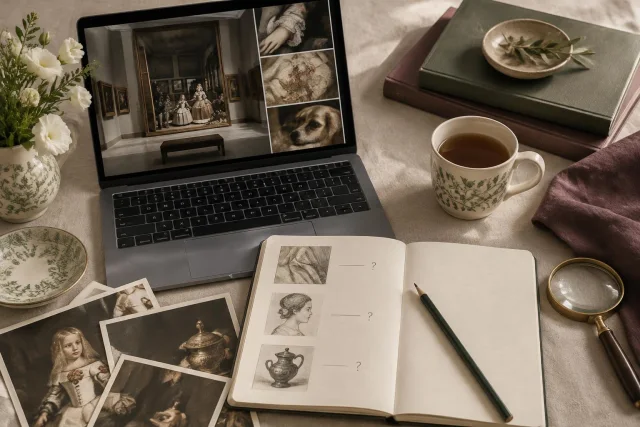
If you are not going to London, you can try the same visual question with a household object. It is a personal adaptation, not an official activity of the National Gallery.