Reading the five care families
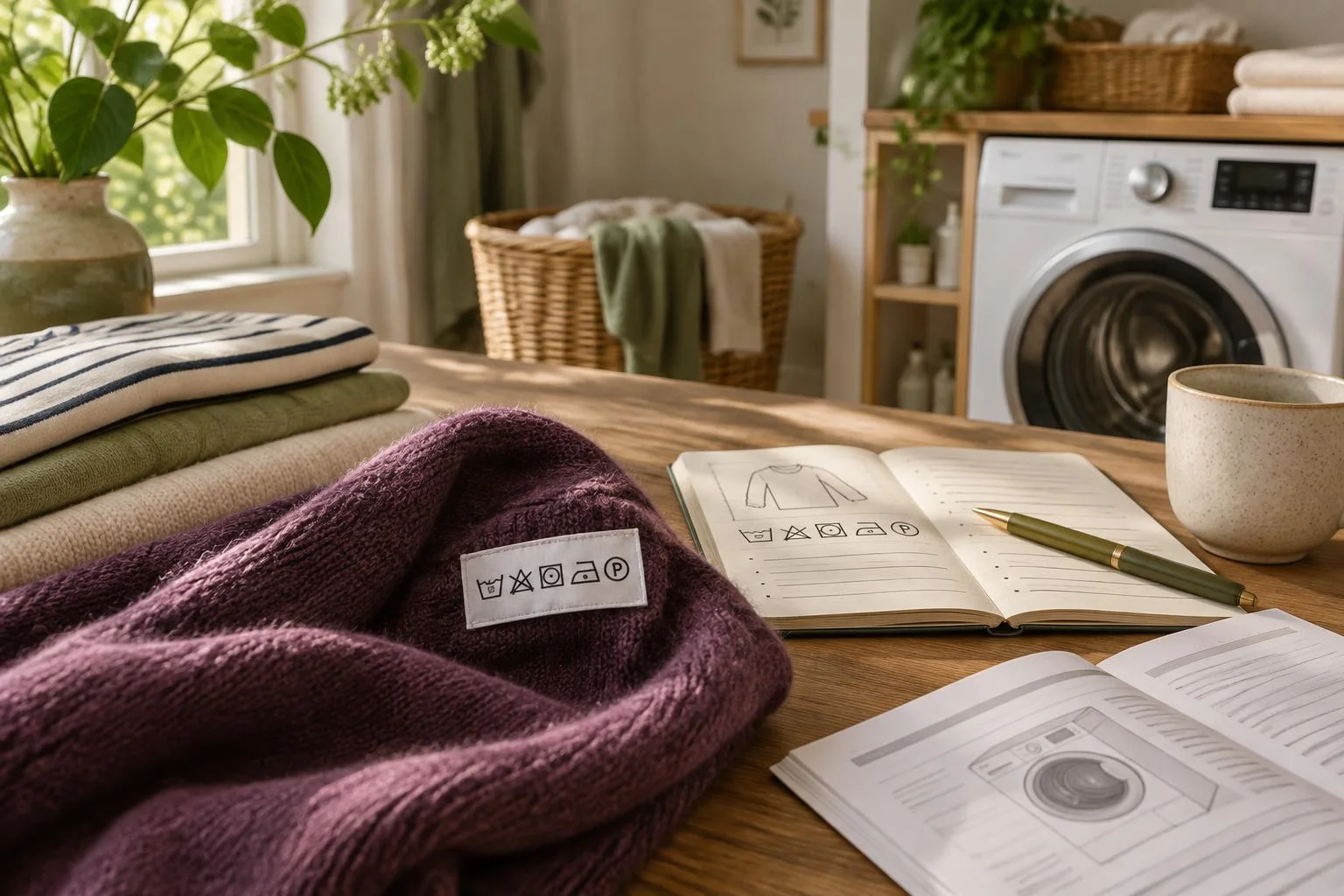
Before choosing a program, locate the garment's label and read it completely. GINETEX documentation on symbols linked to ISO 3758:2023 organizes the instructions into five families: washing, bleaching, drying, ironing, and professional care. Each one provides different information; focusing only on the washing symbol may leave out other relevant restrictions.
You can convert the instructions into a simple note, written in your own words: identify the garment, record what the label indicates, and note any pending doubts. There is no need to memorize all symbols to recognize when an indication requires more attention. The official GINETEX reference allows consulting its explanations; avoid reproducing or redrawing sets of symbols without first reviewing the usage conditions communicated by the organization.
Interpreting maximums and restrictions
According to GINETEX, the number inside the tub expresses a maximum temperature, not a temperature you must necessarily use. The bars that appear under the tub modify the indicated mechanical intensity. Therefore, read those details along with the other instructions and do not turn a single data point into a universal recipe.
The label refers to the specific garment, not just the fiber. The fact that a fiber tolerates a certain temperature does not confirm that the finish, decorations, or construction of that piece also tolerate it. For ironing, the GINETEX guide indicates attending to the label rather than deciding solely based on the type of fiber.
Relating label and equipment manual
Once the instructions are understood, contrast them with the manual of the equipment you intend to use. The selection of the program must respect all relevant restrictions of the label and the device's indications. If the label distinguishes professional care from domestic washing, do not assume that a professional treatment can be substituted by a washing machine cycle: they are different categories.
Consult before experimenting
If the label is incomplete, the garment is valuable, or you do not understand an indication, consult the manufacturer or a textile care professional before trying a treatment. This guide does not prescribe methods for specific stains nor mixes of domestic products. Consulting also does not guarantee that all damage can be avoided nor that a treatment will produce a determined result.
If it is useful to you, keep the care information before the label becomes illegible. This way, you will have the available instructions at hand and can recognize when information is missing to recommend a treatment.