Fragrance, materials and style catalogue
Documented profiles of fragrances, materials, ingredients, brands and outfits. Check features, provenance and sources to make informed comparisons.
 AI-generated conceptual illustration
A Simple Jersey Knit and an Open Jacket
Editorial suggestion: use a jersey-knit top as a base and add an open jacket you already know. Change only the length of the layer to see how the outfit varies with the same trousers. The source supports the textile term, while the proportions exercise is editorial. No garments are presented as tested, and no cut is claimed to suit everyone.
View sheet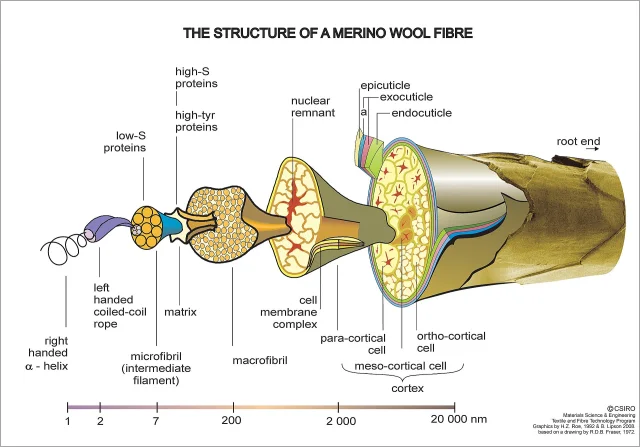 CSIRO
CSIROMerino wool
Woolmark presents merino wool as a fiber of ovine origin, obtained from merino sheep. On a label, this information identifies the material and should be read alongside the rest of the composition. The catalog distinguishes this fiber from techniques such as ribbing or twill: one tells you what the garment is made of, while the others describe how its surface is constructed.
View sheet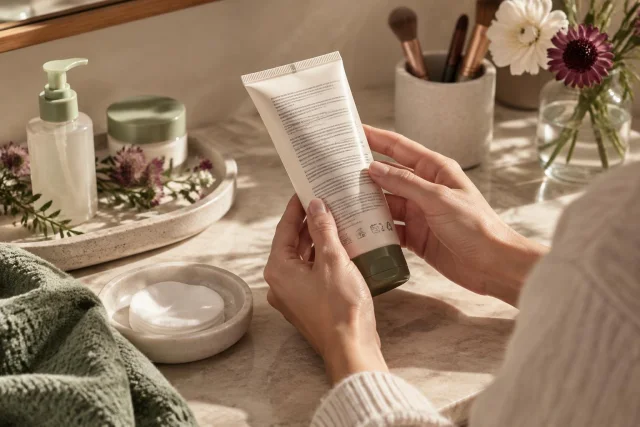 AI-generated conceptual illustration
Reading a Cosmetic Label
The FDA guide brings together elements of cosmetic labeling in the United States, including identity, quantity, and the ingredient list. This entry serves as an exercise in reading documentation, with an explicitly defined geographic scope. When comparing products, keep the full name and version of the packaging consulted. This entry does not replace the manufacturer’s information and is not presented as a summary of European regulations.
View sheet AI-generated conceptual illustration
Merino and Layers You Can Take Off
Editorial suggestion: build an outfit around a merino wool garment and an outer layer you can carry by hand when the temperature changes. Choose pieces to suit your day and check their specific care instructions. Woolmark documents the fibre used as a reference; the combination is a suggestion of our own, without thermal measurements or an evaluation of commercial garments.
View sheet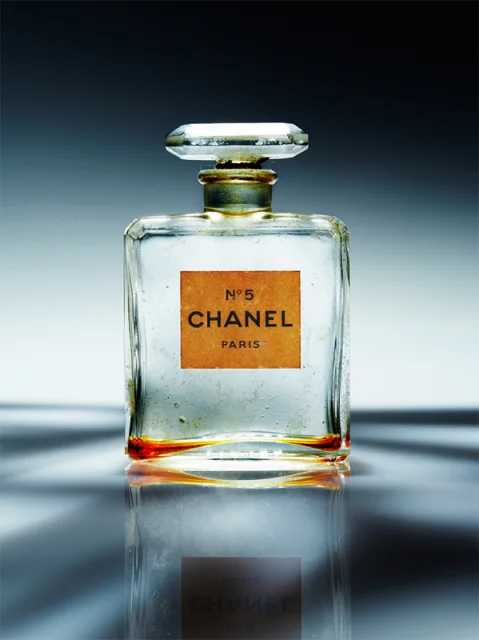 Austin Calhoon · Wikimedia Commons · CC BY-SA 3.0
N°5 Eau de Parfum
CHANEL's official page describes N°5 Eau de Parfum based on a bouquet of rose and jasmine enhanced by aldehydes. The reference to the latter is part of the composition's language, not an evaluation conducted here. Identifying the exact version facilitates an orderly comparison within N°5. The sheet does not extend these notes to other concentrations nor promise an identical experience for each person.
View sheet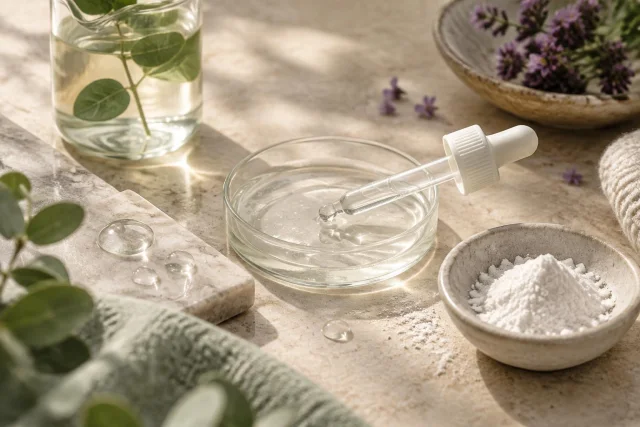 AI-generated conceptual illustration
Niacinamide
Niacinamide is a form of vitamin B3. The consulted The Ordinary product information includes it in a water-based serum with zinc PCA and makes it possible to check the ingredient names. This documentary example helps identify the term on packaging without attributing the same results to every product containing niacinamide. Choosing a formula requires its complete information, not a promise based on a single ingredient.
View sheet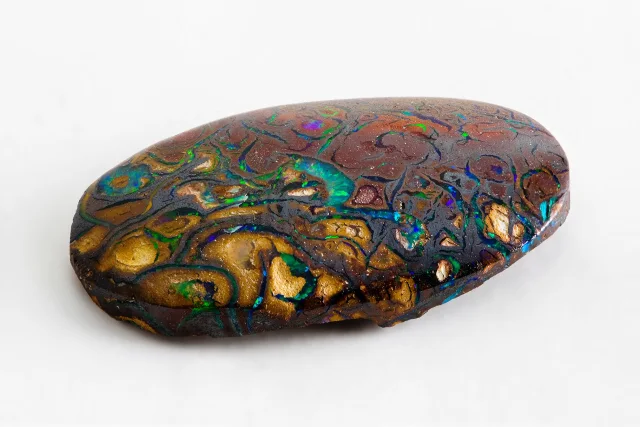 Noodle snacks
Opal
Opal is hydrated silica and can show play-of-color due to the interaction of light with silica spheres, according to GIA. This phenomenon offers a specific vocabulary to describe the appearance without confusing it with a simple uniform tone. This entry introduces the material; the classification, treatments, and characteristics of a specific piece require individual documentation and are not deduced from the name.
View sheet Diliff · Wikimedia Commons · CC BY 2.5
Oxford
Oxford designates here a basket-weave construction that CottonWork includes among its shirt fabrics. Recognizing the name helps to formulate questions about texture and finish, but it does not identify a fiber by itself. To compare two garments, it is interesting to look at their composition, observe the fabric up close, and keep the care instructions from the manufacturer of each model.
View sheet AI-generated conceptual illustration
Parabens and Preservation
Parabens are a family of substances used as preservatives in cosmetics. The FDA explains this function and cites names such as methylparaben and propylparaben, which can be recognized on a label. This entry offers vocabulary for interpreting a formula without classifying products as good or bad based on a single word. The safety of any specific formula has not been evaluated, and no replacement is proposed.
View sheet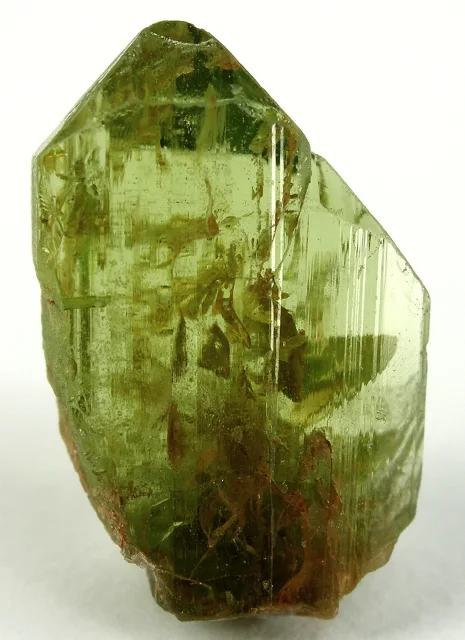 Rob Lavinsky, iRocks.com – CC-BY-SA-3.0
Peridot
Peridot is the gem variety of olivine and GIA describes it with a yellowish-green color. This mineral association provides a more precise data point than using only a color name in a sheet. In the catalog, it can be compared with other green gems, keeping their identities separate. Spiritual properties are not attributed, nor is the authenticity or provenance of jewelry certified based on this general information.
View sheet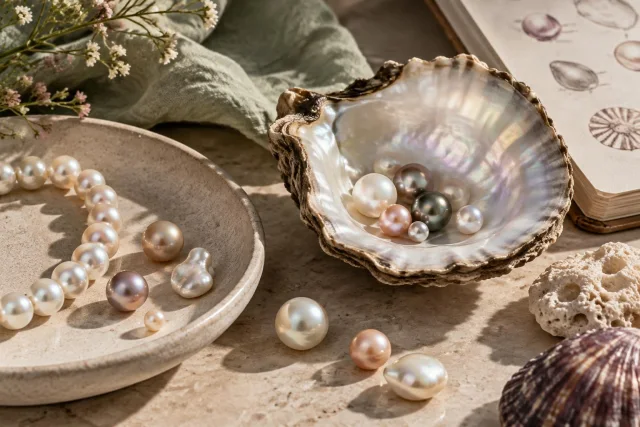 AI-generated conceptual illustration
Pearl
Pearls are organic gems formed by mollusks. GIA distinguishes natural from cultured and documents a diversity of shapes and colors broader than the usual white sphere. This sheet serves to read those differences without establishing a universal aesthetic hierarchy. Identification, origin, and the conditions of each piece must be consulted in their documentation, not inferred from their appearance.
View sheet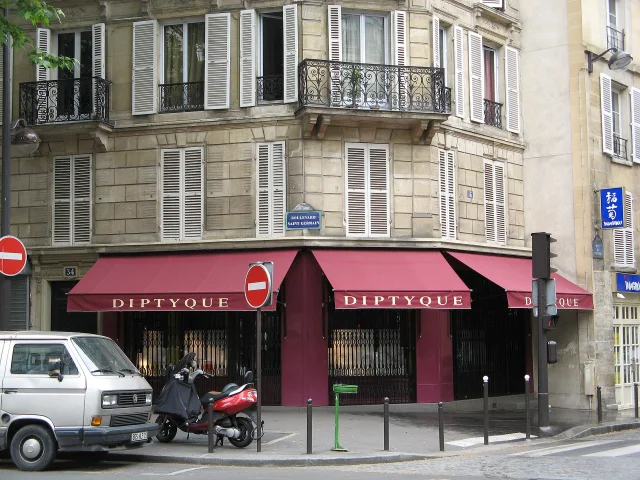 Micha L. Rieser · Wikimedia Commons · CC BY-SA 3.0
Philosykos Eau de toilette
Philosykos proposes, according to Diptyque, a journey through different facets of the fig tree: leaf, milk, and wood, along with black pepper. The house links it to a memory of summer in Greece. Registering this Eau de toilette separately allows avoiding confusion with the Eau de parfum. The presentation collects the manufacturer's narrative and does not attribute personal sensations to the writing.
View sheet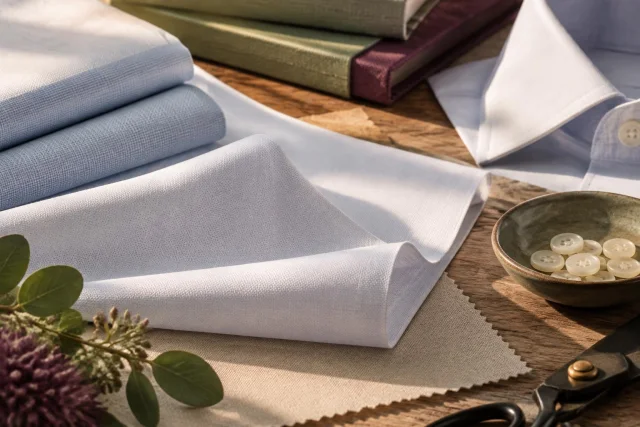 AI-generated conceptual illustration
Pinpoint
Pinpoint appears in the CottonWork guide as a variation of Oxford with finer threads and a tighter weave. This relationship is useful for reading shirt catalogs and distinguishing close terms. The description does not allow for assessing a garment that has not been examined: it retains its own composition and care instructions, and specific references should be compared rather than assuming that the name guarantees a quality.
View sheet AI-generated conceptual illustration
Pinpoint and a Pop of Colour
Editorial suggestion: pair a pinpoint shirt with two garments in colours you already wear often, then try a different-coloured accessory. Note whether you prefer it near your face or on your bag so you can repeat the choice. The source explains the shirt fabric; this combination is from Gentle Chic and does not imply a purchase or garment testing.
View sheet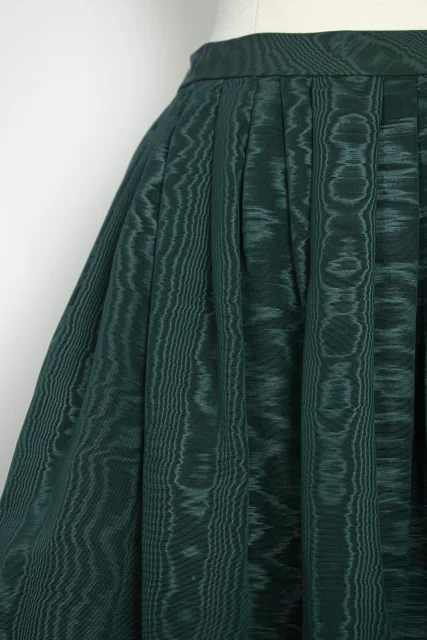 Hunt Museum and Inés Rivilla López · Wikimedia Commons · CC BY-SA 4.0
Poplin
CottonWork presents poplin as a fabric with a compact construction, with greater density in the warp than in the weft. In the wardrobe, that name is a clue to start observing the surface, not a complete composition. It is advisable to also read the garment's label and compare real samples before attributing a specific weight, touch, or behavior to it.
View sheet AI-generated conceptual illustration
Poplin with a Knit Garment
Editorial suggestion: put a poplin shirt with a knit garment and choose the order of the layers according to how much room you need to move. Try the outfit while seated before deciding to wear it for your day. The link provides information about the fabric in question; the choice of garments and colors is an editorial suggestion, with no specific items evaluated.
View sheet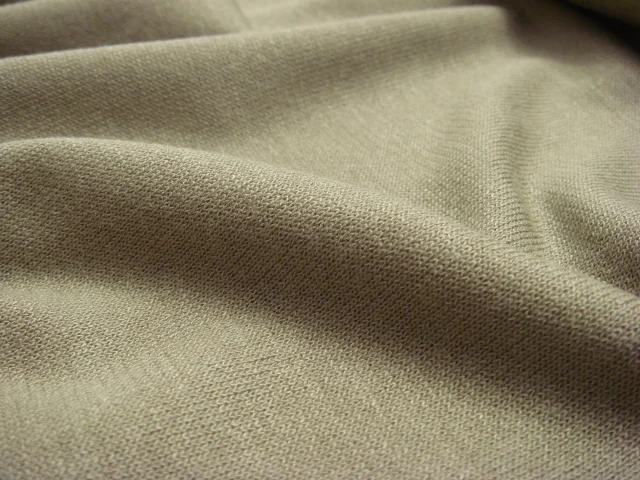 teslar · Wikimedia Commons · CC BY-SA 3.0
Jersey knit
CottonWork distinguishes jersey knit within simple knit constructions. The name is useful for separating a loop structure from woven fabrics when organizing the wardrobe. Afterwards, one must consult the fiber and the instructions of each garment: this entry does not presuppose a unique composition or a fixed degree of elasticity, and it does not describe a usage test.
View sheet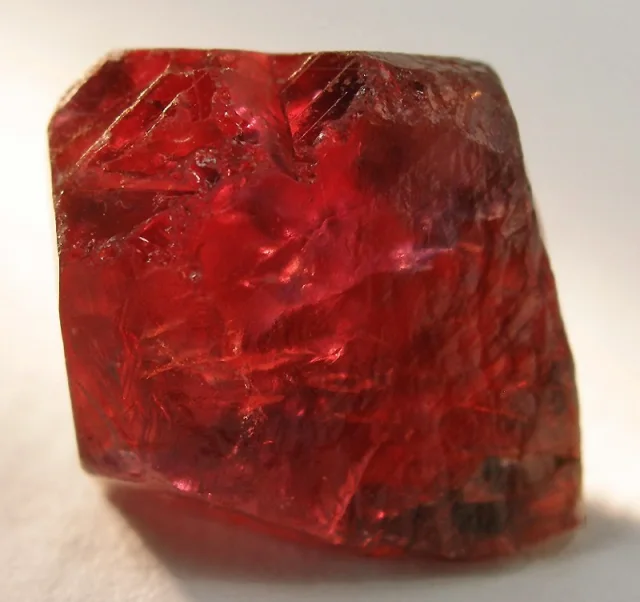 Rob Lavinsky, iRocks.com – CC-BY-SA-3.0
Ruby
The ruby belongs to corundum and owes its red color to chromium, according to GIA. It shares the mineral species with sapphire, although their names distinguish varieties. Knowing that relationship helps to organize the catalog by materials and colors without turning the name into a guarantee of quality. No value estimates are offered, nor is a specific mine attributed to unexamined specimens.
View sheet