What the source contributes
Woolmark, an organization dedicated to promoting wool, offers clear guidelines on caring for these garments. Its main recommendation is to always check the label on each garment before washing or storing it. The source emphasizes that not all wool garments are alike; it distinguishes between knitted structures and other compositions, which means the care method should be adapted to the specific piece rather than inferred generically from the presence of the fiber. Woolmark also recommends emptying pockets and removing any accessories before putting a garment away, helping ensure that the storage process is safe and orderly.
How to apply this in your context
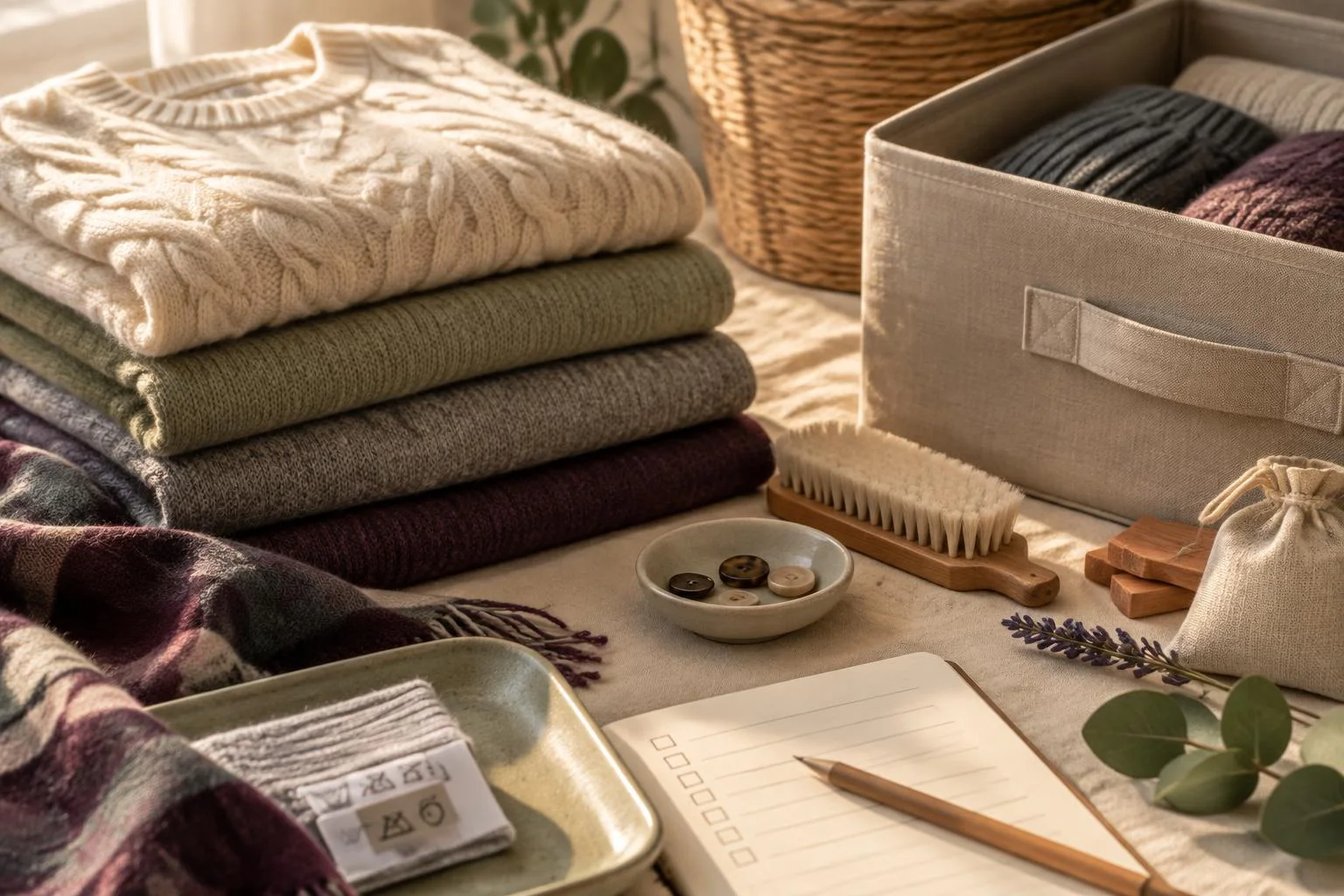
To put these recommendations into practice, it is helpful to organize the process into three phases: cleaning, repairs, and storage. First, identify garments that need cleaning right away and separate them from those ready to be stored. Second, check for damage that needs attention before storage, such as loose seams or pills, and note any repairs that are still needed. Third, when putting a garment away, make sure it is clean and dry, with empty pockets and no accessories attached. This structure avoids improvised treatments and makes it possible to keep a realistic track of each garment’s condition. Don’t assume that all sweaters can be machine-washed or tumble-dried; the label is the only valid reference for determining the correct method.
Questions to help you choose carefully
When you have a wool garment, ask yourself: What exactly does the label say about washing and drying? Is the fabric structure delicate or durable? Are there accessories that should be removed to prevent damage during storage? Is the garment completely clean and dry before you put it away? These questions help you make informed decisions and avoid unnecessary damage. Remember that care should be tailored to each item; what works for a thick sweater may not suit a fine scarf.
Limits of this guide
This guide is based on Woolmark’s general guidelines and does not replace reading the label on each garment. It does not claim that all wool products are alike, nor does it guarantee that damage will be prevented if specific instructions are not followed. The source’s promotional environmental claims are not turned here into editorial conclusions about sustainability. The aim is to offer a practical structure for organizing garment care, not to promise specific results or validate undocumented methods. Adapt these steps to your circumstances and the characteristics of your garments.